
Blog
Naqsh-e Rustam: A Stone Testament to Four Empires (The Ultimate Traveler’s Guide)
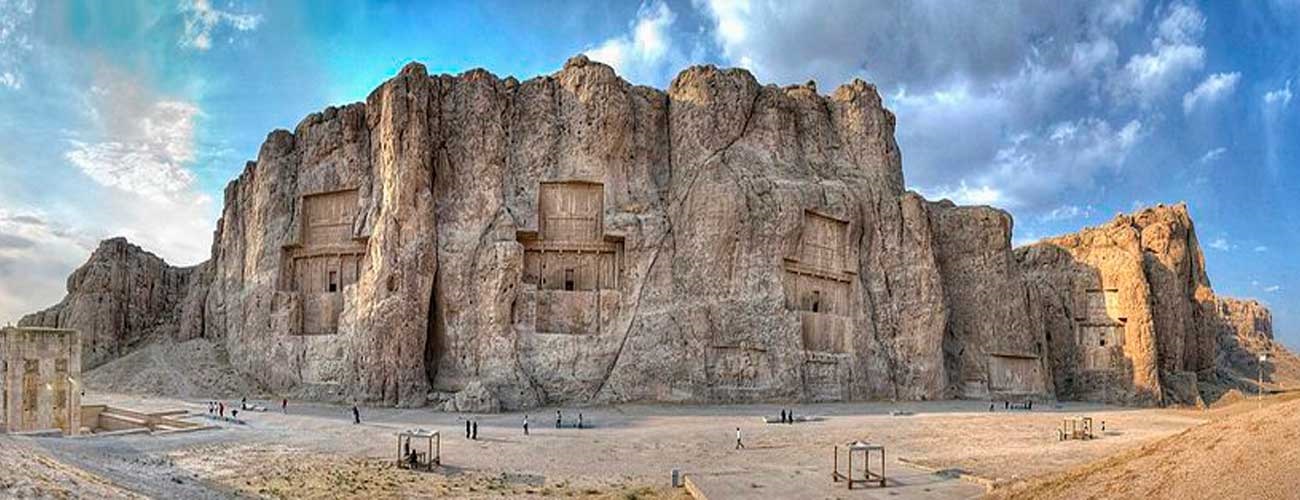
Naqsh-e Rustam (Necropolis), located just a short drive from Shiraz and near Persepolis, is more than just an archaeological site. It is a living stone book of Iranian history, simultaneously showcasing four key periods of Iranian civilization: Elamite, Achaemenid, Parthian, and Sasanian. If you are planning comprehensive content or organizing a Persepolis Tour from Shiraz, understanding the magnitude and details of this location is essential.
Part I: Immortality Carved in Stone (Historical Overview)
Rostam Role
Naqsh-e Rustam is where kings sought eternal rest and where their power was chiseled onto the mountain face for millennia. The most significant monuments include:
- 1. The Achaemenid Rock Tombs (Dakhmehs): Four massive, cross-shaped rock tombs carved high into the cliff face are the most recognizable features.
- Who rests here? Darius the Great’s tomb is the only one identified by a trilingual cuneiform inscription. The other three tombs (attributed to Xerxes I, Artaxerxes I, and Darius II) are identified based on stylistic similarities and historical texts, reflecting the Achaemenid belief in eternity and the afterlife.
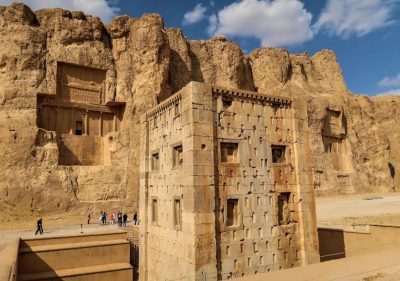
- 2. Ka’ba-ye Zartosht (The Enigmatic Cube): This cubic structure, standing opposite the tombs, remains one of the great archaeological puzzles. While its exact function is still debated, leading theories suggest it was either a fire temple (a place to keep the sacred fire) or a treasury/sacred archive (a repository for vital state documents or royal standards).
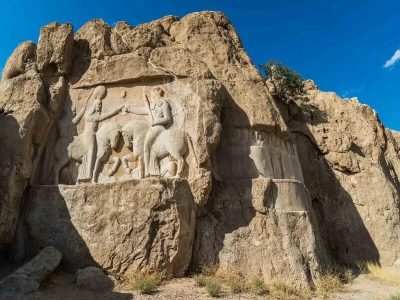
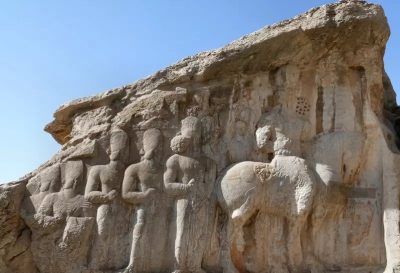
- 3. The Sasanian Rock Reliefs (Scenes of Glory): This section is the pulsating heart of Sasanian power. Seven massive reliefs dramatically depict scenes of royal coronations and military triumphs.
- The Most Famous Relief: Undoubtedly, the scene of Shapur I’s Triumph over Valerian (the captured Roman Emperor) stands out. This carving is an unparalleled symbol of Iran’s victory over the world’s superpower at the time.
- 4. The Oldest Traces: The oldest surviving carving is a badly damaged Elamite relief, dating back to about 1200 BCE, which lies beneath the Sasanian carvings. Remnants of Parthian reliefs have also been found here.
Part II: Why “Naqsh-e Rustam”? (The Root of a Myth)
Naqsh-e Rustam Shiraz
The name “Naqsh-e Rustam” translates to “The Picture of Rostam.” This naming convention is not historical and originated in the post-Islamic era, likely during the Safavid or Qajar periods, through local folklore. Observing the colossal Sasanian reliefs depicting scenes of battle and heroism, local people attributed them to the greatest mythical hero of the Shahnameh (Book of Kings): Rostam. Therefore, the name has no connection to historical fact but is purely rooted in Iranian epic mythology.
Part III: Practical Traveler’s Guide
For planning your trip to this site, especially if you are conducting Shiraz tours that cover the surrounding historical landscape, consider these practical tips:
| Practical Detail | Helpful Information |
| Required Visiting Time | Approximately 1.5 to 2 hours is sufficient for a thorough visit to study all the monuments and explanatory plaques. |
| Best Time to Visit | Seasonally: Early Autumn to mid-Spring (October to May) to avoid the intense summer heat. Daily: Early morning or late afternoon (near sunset) to avoid crowds and photograph the structures in softer light. |
| Combined Visits | Naqsh-e Rustam is only 5–6 km from Persepolis. It is highly feasible to visit Persepolis, Naqsh-e Rustam, and then Pasargadae (Cyrus’s tomb) in one intensive full-day itinerary. |
| Facilities | The site provides basic amenities, including parking, restrooms, and a small shop/kiosk for water and snacks near the entrance. |
| Guides & Information | Explanatory plaques in Persian and English are available beside each major monument. If specialized guidance is required, it is best to arrange an official local tour guide beforehand. |
Part IV: The Visiting Experience (A Sense of Place)
Standing at this historic site, beneath the towering Achaemenid tombs and alongside the magnificent Sasanian reliefs, evokes a feeling of immensity, silence, and timelessness. While Persepolis represented the magnificent “life” of the kings, Naqsh-e Rustam represents their “eternity” and is the ultimate visual record of Sasanian military and ideological power.
The best photo angle to capture the entire site is from a distance, allowing the cubical Ka’ba-ye Zartosht to be framed in the foreground, with the four cross-shaped Achaemenid tombs carved into the cliff face serving as a dramatic backdrop.



Recent Comments