
Blog
Chehel Sotoun Palace: The Essential Isfahan Travel Guide to Architecture and History
Chehel Sotoun Palace, a shining jewel in the heart of Isfahan, is a glorious relic of the Safavid dynasty and a prime example of Iranian art, architecture, and garden design. This structure, which, according to its historical inscription, is referred to as “the most blessed building in the world,” is an intelligent synthesis of nature, water, and monumental architecture, making it a must-see site for any comprehensive Isfahan tour in 5 days.
1. The Palace’s Genesis: Founders, History, and Scale
| Detail | Key Descriptions |
| Original Name and Area | The palace was built in the center of the Chehel Sotoun Garden (Bagh-e Jahan Nama), which originally covered an area of over 67,000 square meters. |
| Construction Period and Official Date | The core structure began during the reign of Shah Abbas I, but the final grand hall and portico were completed under Shah Abbas II. The year 1057 AH (1647 AD) is inscribed on the palace, marking its completion. |
| Primary Function | Chehel Sotoun was not a residential palace. It served as a Reception Hall (Bar-e Ām) used for official ceremonies, hosting foreign ambassadors, high-ranking guests, and holding grand royal celebrations. |
2. The Mystery of the Name and Architectural Wonders
2.1. The “Forty Columns” Mystery
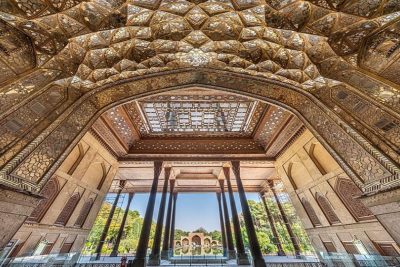
Chehel Sotoun Palace physically has only twenty wooden, octagonal columns. The name, meaning “Forty Columns,” is a metaphor for plurality and majesty. It is derived from the reflection of the twenty columns in the large rectangular pool situated directly in front of the main portico, which doubles their number to forty.
2.2. A Synthesis of Architectural Styles
The architecture of Chehel Sotoun is a stunning blend of Iranian, Farangi (European), and even Chinese styles. Key architectural features include:
- The Twenty-Columned Portico (Eyvān): Supported by columns often crafted from single, monolithic trunks of plane trees.
- The Hall of Mirrors (Tālār-e Āyeneh): Famous for its delicate mirror work.
- The Stone Lions: Four stone lion statues are placed at the corners of the central pool, historically spouting water into the basin.
2.3. The Essential Link to Water and the Persian Garden
The large pool was crucial not only for the aesthetic illusion of the forty columns but also for cooling the atmosphere, a necessary feature of Isfahan tourism. The entire complex is a perfect example of the “Kushk-Garden” (Palace-in-a-Garden) architecture typical of the Safavid era.
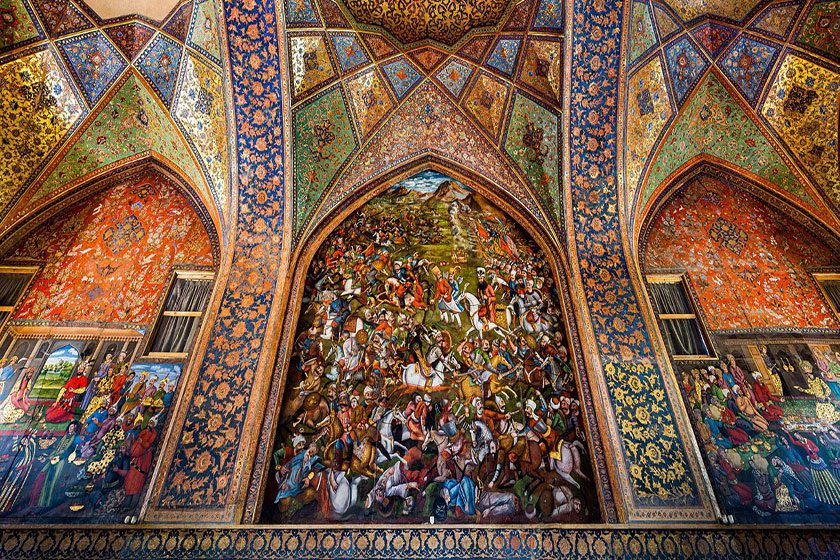
3. The Mural Paintings: Illustrated History of Safavid Iran
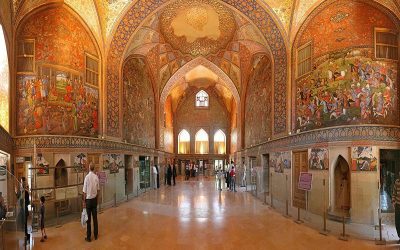
The murals within the central hall are the palace’s most significant artistic feature. These large paintings, uncovered during restorations in the 1950s, act as an illustrated history of the Safavid dynasty:
- Grand Historical Scenes: Depicting major political and military events, such as the reception of foreign envoys, battles like the conflict between the Iranian and Ottoman armies, and the grand banquet of Shah Abbas II.
- Miniature and Decorative Art: Finer decorations on the walls and ceiling featuring mirror work, muqarnas, and elaborate gilding, reflecting the refined techniques of the Isfahan School of Painting.
4. Practical Information for Visitors
4.1. Location and Access
Chehel Sotoun is a centerpiece of any serious Isfahan travel guide.
- Address: Isfahan, Imam Hossein Square (Darvazeh Dolat), Ostandari Street.
- Accessibility: The palace is conveniently located very close to Naqsh-e Jahan Square, accessible within a less than 5-minute walk from its western side.
4.2. Visiting Hours and Duration
- Hours: The palace is open daily, except during official mourning holidays, from approximately 9:00 AM to 5:00 PM.
- Duration: Visitors should allocate 1.5 to 2 hours to fully appreciate the paintings, the Hall of Mirrors, and the serene garden grounds.
4.3. Photography and Facilities
- Photography Rules: Flash photography is strictly prohibited inside the main hall to protect the historical murals from damage.
-
Facilities: Basic facilities, including restrooms and handicraft shops, are available on the palace grounds.




Recent Comments